There is a familiar rhythm to choosing trail shoes. You start with the names you know, compare a Salomon with a HOKA, add another established favorite, and eventually choose whichever feels safest.
KAILAS FUGA offers a more interesting place to begin.
Its shoes are colorful, unapologetically technical and built around a simple idea: when the trail becomes difficult, your footwear should feel more secure—not less.
If the name is new to you, the brand itself is not.
From climbing equipment to trail-running shoes
KAILAS was founded in China in 2003 as a climbing and mountain-sports company. Long before it built running shoes, the brand was producing equipment for people moving through steep, exposed and unpredictable environments.
That background still shapes FUGA today.
KAILAS began developing trail shoes in 2013 before officially launching the FUGA line in 2016. The collection has since expanded from its original mountain-running models into a complete system covering mixed trails, ultradistance races and steep technical terrain. KAILAS documents the development of FUGA here ↗
FUGA did not begin as a road-shoe company searching for a trail identity. It came from the mountain first.
That difference is visible throughout its footwear.
Secure by design
The first detail you are likely to notice is the lacing.
Many FUGA models use the brand’s AWS—or Adjust Whole Sole—system. Instead of asking one traditional lace to tighten the entire shoe, AWS divides the adjustment into separate sections. On current models such as the EX 3 and EX 330, the forefoot can be secured separately from the upper portion of the foot.
That matters most on descents. As the trail drops, the foot naturally begins moving toward the front of the shoe. A more controlled forefoot hold is designed to reduce that movement without making the entire upper uncomfortably tight.
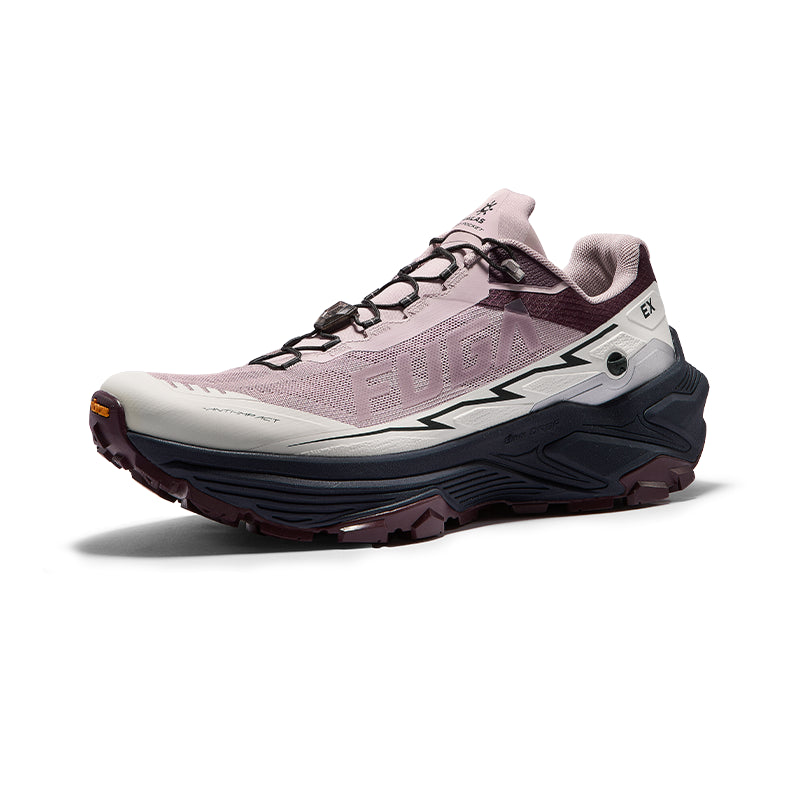 UPPER ZONEFOREFOOT ZONETWO-ZONE ADJUSTMENT
The result is a shoe that can feel tailored to the foot rather than simply fastened around it.
Grip that belongs in premium company
FUGA uses Vibram Megagrip across many of its prominent models. This is the same respected outsole family used by several leading Western trail brands. It is designed for traction across wet and dry surfaces, although the way each shoe shapes and positions its lugs remains equally important.
The EX 3 uses 4mm lugs to remain useful across mixed trails. The longer-distance EX 330 combines deeper 6mm lugs around selected areas with 4mm lugs elsewhere.
You do not need to memorize the measurements. The important point is that FUGA treats the outsole as part of the shoe’s purpose—not as a generic layer of rubber beneath it.
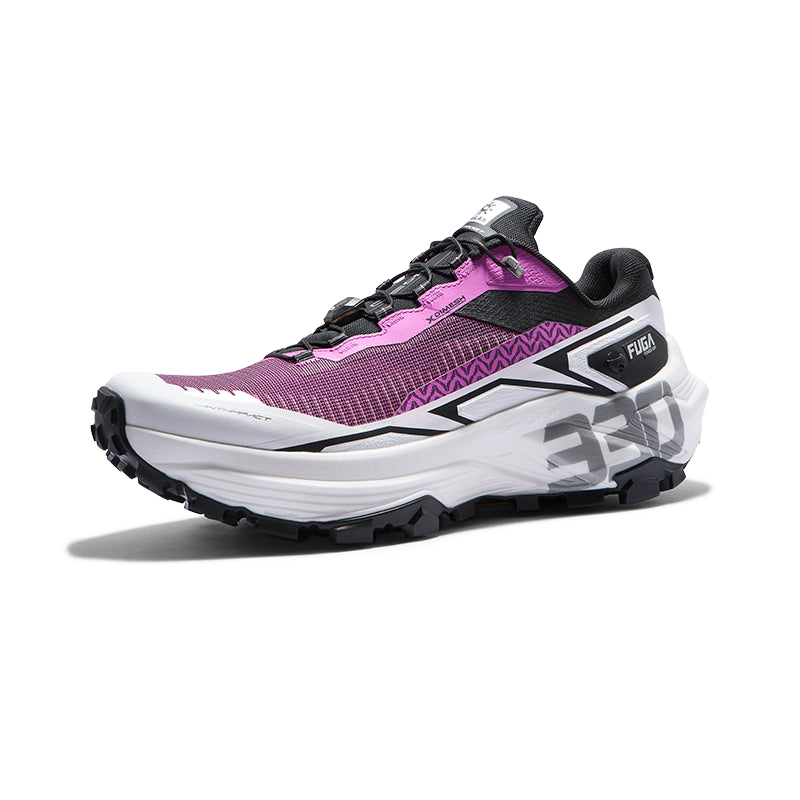 6MM OUTER GRIP4MM CENTRAL LUGSDUAL-DEPTH TRACTION
Technical details that make practical sense
Look around a FUGA shoe and small mountain-focused details begin to appear:
- Lace pockets keep adjustment cords contained.
- Reinforced uppers add protection around the foot.
- Gaiter attachment points help keep loose debris outside.
- Zoned outsole patterns support climbing, braking and direction changes.
- BOA-equipped models provide small, dial-based adjustments.
- Specialized models address different terrain rather than merely changing color.
None of these features is especially dramatic in isolation. Together, they create footwear that feels thoroughly considered.
FUGA’s appeal is not technology for technology’s sake. It is the sense that someone has thought about what happens several hours into a run—when the ground becomes awkward, your feet begin to swell and a small fit problem stops feeling small.
Two families—not one shoe for every trail
The EX 3 is the natural introduction to FUGA, but it is only one interpretation of the brand.
EX is the broader entry point: mixed terrain, long-distance cushioning, waterproof variations and the plated EX PRO racer. DU is the more planted technical side, using wider contact platforms and additional structure for steep or complex ground.
BOA changes how the shoe is adjusted. GTX changes its weather protection. Neither label automatically makes a shoe faster or more suitable for every trail. The current OTHERKIT edit compares twelve selections across those two families.
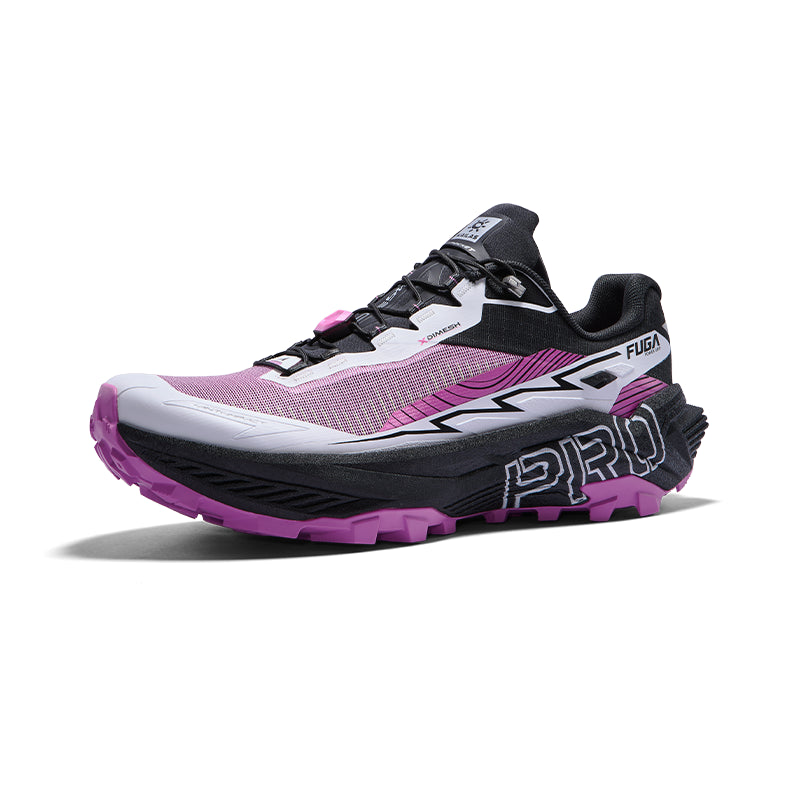 CARBON-PLATED TRAIL PERFORMANCE
Which KAILAS FUGA Shoe Is Right for You?
The visual guide to the seven-model edit is ready
The wider trail world is taking notice
FUGA may be a new name to some readers, but its athlete roster is already international. KAILAS says 56 elite runners are part of the wider FUGA team, spanning world-class, national-level and ultra-distance athletes.
The point here is not to turn a brand introduction into a results archive. It is simply to show that FUGA footwear is being chosen in demanding racing environments by runners with many options.

Joaquín López
An Ecuadorian ultrarunner whose official KAILAS profile includes second place at the 2022 TDS.

Sunmaya Budha
Her official profile records a breakthrough 2022 season that included the CCC and World Mountain & Trail Running Championships.
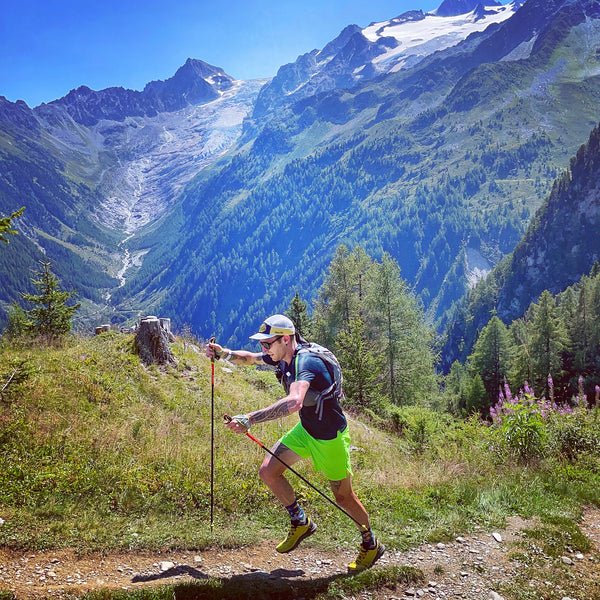
Scotty Hawker
KAILAS documented Hawker racing the FUGA Pro 3 at CCC in 2021 after his UTMB podium in 2019.
Images and athlete details: official KAILAS profiles and editorial pages. Select a portrait to view its source.
For now, the takeaway is straightforward: FUGA is not relying solely on striking colours or unfamiliar technology. Its equipment is being used over serious distances and serious terrain.
Premium by intention
FUGA is not positioned as the inexpensive substitute for a Western trail shoe.
The EX 3 and EX 330 sit in premium territory beside established models from Salomon, HOKA and other familiar names. Their value comes from what is built into them: Vibram outsole technology, adjustable two-zone closures, protective mountain construction, distinct models for different terrain and bold, unusually confident design.
The question is not whether a FUGA costs less. The better question is whether it gives you more of what matters on your trails.
For runners concerned with grip, descending security and a precise hold, the answer may be yes.
Why FUGA deserves a place on your shortlist
FUGA combines genuine mountain history, credible components and international race visibility with an identity that does not feel designed to imitate anyone else.
It shares some of Salomon’s technical confidence. It reaches toward the long-distance protection associated with HOKA. But the adjustable fit, terrain-specific construction and visual personality belong to FUGA.
The brand is not waiting to become familiar before building serious footwear. It has already built it. The rest of us are simply beginning to notice.
Research-based editorial · Manufacturer information and attributed independent reporting; not an OTHERKIT wear test. Product photography: KAILAS official listings, used for this design preview. About our links